
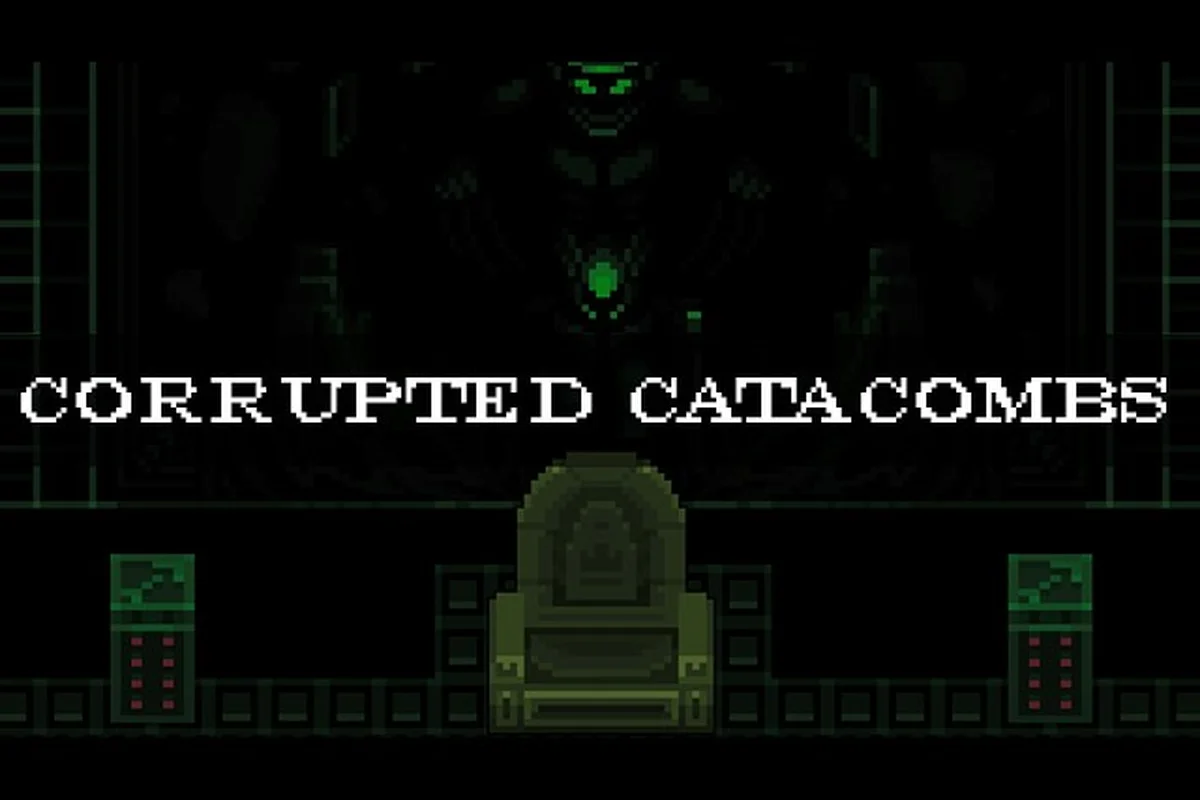
Dungeons are the heart of Pixel Quest's endgame loop, and knowing how to get dungeon keys efficiently separates players who progress weekly from those who hit a wall. With over 30 dungeons currently live in the alpha build according to the official Pixel Quest page on Roblox, the sheer volume of content can feel overwhelming when you first start mapping out your farming route. This Pixel Quest dungeon guide breaks down every dungeon type, the exact key requirements for each tier, and the most efficient order to tackle them based on your current power level. Whether you are hunting for legendary drops, grinding Valor Tokens, or just trying to clear the Corrupted Catacombs for the first time, understanding the dungeon ecosystem is the single biggest factor in your long-term progression speed. Let's get into the full breakdown of Pixel Quest all dungeons and how the key system actually works.
Pixel Quest Dungeon List and Tier Breakdown
The current dungeon roster spans five distinct tiers, each gated by both player level and key rarity. Community data from the official DevForum post confirms the game draws heavy inspiration from Realm of the Mad God, which means dungeon difficulty scales aggressively and death is permanent if you are not careful. The full Pixel Quest dungeon list includes starter zones for solo players, mid-tier dungeons that require a small group, and endgame gauntlets designed for coordinated teams of four. Below is the complete tier structure as of the latest alpha update.
| Dungeon Tier | Dungeon Names | Recommended Level | Key Type Required | Group Size |
|---|---|---|---|---|
| Tier 1 | Mushroom Grotto, Goblin Warrens | 1-10 | Wooden Key | Solo |
| Tier 2 | Crystal Caverns, Ember Mines | 11-20 | Iron Key | Solo or Duo |
| Tier 3 | Sunken Temple, Frozen Spire | 21-30 | Silver Key | Duo or Trio |
| Tier 4 | Corrupted Catacombs, Abyssal Depths | 31-40 | Gold Key | Trio or Full Party |
| Tier 5 | Void Citadel, Celestial Bastion | 41+ | Void Key | Full Party |
Each tier introduces new mechanics rather than just stat inflation, which is why the Pixel Quest dungeon guide community strongly recommends progressing through tiers in order rather than rushing ahead. The Corrupted Catacombs trailer on the official YouTube channel showcases the bullet-hell patterns you will face at Tier 4, and those patterns assume you have already learned the dodge discipline from earlier dungeons. Players who skip ahead typically burn through their key supply without clearing the final boss, which wastes the most valuable resource in the game.
The tier list also determines what kind of loot you can expect. Tier 1 and Tier 2 dungeons drop common and uncommon gear, while Tier 3 introduces rare items with set bonuses. Tier 4 and Tier 5 are the only sources of legendary equipment, which is why the loot guide dedicates so much attention to optimizing your dungeon farming routes. Understanding which tier drops what you need is essential before you spend any keys.
How to Get Dungeon Keys in Pixel Quest
The key system is the primary gatekeeper for dungeon content, and learning how to get dungeon keys efficiently is a skill in itself. Keys drop from regular overworld enemies, boss encounters, and quest rewards, but the drop rates vary dramatically by source. According to player reports across the community, overworld mobs have roughly a 2-3% chance to drop a Wooden Key, while Iron Keys drop at about half that rate. Silver Keys and above almost never drop from standard enemies, which forces you to engage with the bounty system and world bosses instead.
| Key Source | Wooden Key | Iron Key | Silver Key | Gold Key | Void Key |
|---|---|---|---|---|---|
| Overworld Mobs | 2-3% | 1% | 0.1% | 0% | 0% |
| World Bosses | 15% | 10% | 5% | 2% | 0.5% |
| Bounty Quests | 20% | 15% | 8% | 3% | 1% |
| Dungeon Boss Drops | 5% | 8% | 6% | 4% | 2% |
| Achievement Rewards | Guaranteed | Guaranteed | One-time | One-time | One-time |
The most reliable way to stockpile keys is through the bounty system, which is why the bounty guide pairs so well with this dungeon guide. Bounty quests refresh daily and offer specific key rewards for completing objectives like defeating a certain number of enemies or clearing a specific dungeon within a time limit. The achievement NPC also grants one-time key rewards for milestones like reaching level 25 or defeating your first Tier 3 boss, so check those regularly.
For players looking for an easy dungeon key, the fastest method is farming the Goblin Warrens entrance area. The goblin shamans that spawn near the dungeon entrance have a slightly higher Wooden Key drop rate than other overworld mobs, and they respawn quickly enough to create a solid farming loop. Community testing suggests you can average one Wooden Key every 15-20 minutes with this method, which is the best early-game key income outside of quests.
Best Dungeon for Farming by Progression Stage
Corrupted Catacombs Boss Phase Transitions
The Corrupted Catacombs boss, featured in the official dungeon trailer, cycles through three distinct attack patterns tied to HP thresholds. At 100-70% HP, it fires a radial bullet burst of 24 projectiles. Crossing the 70% threshold triggers a dash-and-spawn mechanic, summoning two corrupted adds. At 30% HP, the boss enters enrage, increasing projectile speed by 40% while reducing its telegraph window from 0.8 to 0.5 seconds. Position near the arena's bottom corners during Phase 2 to split adds' aggro.
Solo vs. Co-op Dungeon Scaling Mechanics
Dungeon difficulty scales multiplicatively with party size, not additively. A solo player faces mobs with 100% HP and 100% damage output. Adding a second player increases mob HP to 180% and damage to 150%. A full four-player party pushes these values to 320% HP and 240% damage. However, boss loot tables remain identical regardless of party size. For solo players, the Forge2D framework's bullet-hell patterns become more manageable since enemy projectile density doesn't scale—only HP and damage values increase, making solo clears viable with proper dodge timing. If you are pushing into the frozen endgame, the Arctic Palace walkthrough covers its boss phases and how its difficulty compares to Pirate Island and The Gauntlet.
Choosing the best dungeon for your current stage is more nuanced than simply picking the highest tier you can access. The optimal choice balances clear speed, loot value, and key consumption rate. A dungeon you can clear in five minutes with zero deaths is often better than a harder dungeon that takes twenty minutes and risks losing your character to permadeath. The Pixel Quest dungeon guide community has developed a consensus ranking based on efficiency per key spent.
| Progression Stage | Best Dungeon | Clear Time | Key Cost | Primary Loot |
|---|---|---|---|---|
| Early Game (1-15) | Goblin Warrens | 3-5 min | 1 Wooden | Common gear, starter weapons |
| Mid Game (16-25) | Crystal Caverns | 6-8 min | 1 Iron | Uncommon gear, upgrade materials |
| Late Mid (26-35) | Frozen Spire | 10-12 min | 1 Silver | Rare gear, set pieces |
| Endgame (36-45) | Corrupted Catacombs | 15-20 min | 1 Gold | Epic gear, Valor Tokens |
| Max Level (45+) | Void Citadel | 20-25 min | 1 Void | Legendary gear, exclusive cosmetics |
The Frozen Spire is widely considered the best dungeon for mid-game players because its boss patterns are telegraphed clearly and the rare set pieces it drops remain viable well into the endgame. Players report that the Crystal Caverns offers the best key-to-loot ratio in the early game since Iron Keys are relatively common and the dungeon can be cleared quickly even with basic gear. If you are playing solo, the easiest dungeon guide breaks down which dungeons are actually soloable at each tier, since some Tier 4 and Tier 5 encounters are tuned for group coordination and will punish solo players severely.
For endgame farming, the Corrupted Catacombs stands out because it drops both epic gear and Valor Tokens, which you can spend on cosmetics and power-ups. The dungeon's bullet-hell patterns are challenging but fair, and the boss fights teach mechanics that carry over to the Void Citadel. Many veteran players recommend mastering the Corrupted Catacombs before attempting the final tier, since the skill ceiling jump between Tier 4 and Tier 5 is the steepest in the game.
Dungeon Key Strategy and Resource Management
Managing your key inventory is a strategic layer that most new players overlook. Keys stack in your inventory but take up space, and hoarding low-tier keys when you have outgrown those dungeons is a common mistake. The Pixel Quest dungeon guide community recommends a simple rule: never hold more than five Wooden Keys or Iron Keys once you reach Tier 3 content, because the inventory space is better used for loot and consumables. Instead, run those lower dungeons to clear out your key stockpile and convert the drops into gold or upgrade materials.
| Key Tier | Recommended Stockpile | Usage Strategy |
|---|---|---|
| Wooden | 3-5 | Run immediately, convert drops to gold |
| Iron | 3-5 | Run in pairs with a friend for efficiency |
| Silver | 5-8 | Save for set piece farming sessions |
| Gold | 8-10 | Coordinate with group for Catacombs runs |
| Void | 3-5 | Save for organized endgame sessions |
The Valor Token economy also interacts with your key strategy. When you die in a dungeon, you drop a portion of your carried Valor Tokens, which another player can pick up. This creates a risk-reward dynamic where bringing a large token stash into a high-tier dungeon is a gamble. Veteran players recommend banking your tokens before attempting Tier 4 or Tier 5 content, since the death penalty is severe and the token loss can set back your cosmetic progression significantly.
Group coordination is another factor in key efficiency. A coordinated team can clear the Abyssal Depths in roughly the same time as an uncoordinated group takes to clear the Sunken Temple, which means the better your teamwork, the higher-tier dungeon you should be running. The official game page mentions that dungeons are designed for co-op play, and the developer has stated that future updates will add more group-oriented mechanics. If you are primarily a solo player, focus on Tier 1-3 dungeons and accept that Tier 4+ content will require finding a group.
Dungeon Mechanics and Boss Patterns You Need to Know
Dungeon Key Drop Rates by Floor Tier
Key drop rates scale non-linearly with dungeon floor depth. Floor 1-3 mobs drop keys at roughly 1.2% per kill, but Floor 4-6 elites jump to 4.8%, and Floor 7+ mini-bosses guarantee a key every 3-4 kills. Compare this to chests: wooden chests on Floor 1 hold a 5% key chance, while golden chests on Floor 7 hold 25%. For efficient key farming, prioritize elite packs over trash mobs—you'll earn roughly 4x more keys per minute spent, despite the higher HP pool.
Valor Token Efficiency for Dungeon Re-runs
Valor Tokens, earned when defeated, serve as your primary dungeon re-entry currency. A standard Floor 5 clear yields 120-150 tokens, while a full Corrupted Catacombs run nets 400+. Compare this to token costs: a single dungeon key purchase costs 250 tokens, making full clears 60% more token-efficient than buying keys outright. For players farming legendary drops, prioritize token accumulation from boss kills over mob farming—bosses contribute 70% of total token yield per run, making them the optimal token-to-time investment.
Each dungeon tier introduces mechanical twists that require specific responses, and understanding these patterns before you enter saves both keys and lives. The Mushroom Grotto teaches basic projectile dodging with slow, predictable spore clouds. The Goblin Warrens introduces enemy density management, where positioning matters as much as aim. By the time you reach the Crystal Caverns, you are dealing with reflective projectiles that bounce off walls, which requires you to think about angles rather than just dodging in a straight line.
The Sunken Temple introduces the first real bullet-hell boss fight, where the arena floods with telegraphed attack patterns that require precise movement. Community reports indicate this is the first major skill check in the game, and players who struggle here should practice in the Crystal Caverns before spending Silver Keys. The Frozen Spire boss adds a freeze mechanic that slows your movement if you get hit, which can create a death spiral if you are not careful.
| Dungeon | Signature Mechanic | Counter Strategy |
|---|---|---|
| Mushroom Grotto | Slow spore clouds | Maintain distance, strafe in one direction |
| Goblin Warrens | Enemy density spikes | Clear adds first, focus shaman targets |
| Crystal Caverns | Reflective projectiles | Use walls as cover, predict bounce angles |
| Sunken Temple | Telegraphed bullet rings | Learn dodge windows, save dash for escapes |
| Frozen Spire | Freeze on hit | Prioritize movement speed gear, avoid greed |
| Corrupted Catacombs | Multi-phase boss with adds | Assign roles, manage add spawns |
| Void Citadel | Complex pattern combos | Full coordination, dedicated healer role |
The Corrupted Catacombs boss fight is the most complex encounter in the current build, featuring three distinct phases with different attack patterns. Phase one is a standard bullet-hell test, phase two introduces summoning adds that must be dealt with quickly, and phase three combines both mechanics while the boss gains a speed boost. Players report that clear communication is essential for phase three, since the add spawns need to be handled by one player while the rest focus on dodging and damage. The boss guide covers these patterns in more detail, including optimal positioning for each phase.
For the Void Citadel, the final boss combines every mechanic you have learned, and the fight can last over ten minutes with a coordinated group. The boss cycles through attack patterns from earlier dungeons but at higher speed and density, which makes it a true test of everything you have mastered. Players who have cleared the Void Citadel report that the legendary drops are worth the effort, but the key cost and time investment mean you should only attempt it with a group you trust.
Frequently Asked Questions
What is the easiest dungeon key to get in Pixel Quest?
The Wooden Key is the easiest dungeon key to obtain because it drops from overworld mobs at a 2-3% rate and is a guaranteed reward from early bounty quests. Farming the Goblin Warrens entrance area yields roughly one key every 15-20 minutes, making it the most reliable early-game key source.
How do I get dungeon keys in Pixel Quest?
Dungeon keys drop from overworld enemies, world bosses, bounty quests, and dungeon boss kills. The most efficient method is completing daily bounty quests, which offer guaranteed key rewards. Higher-tier keys like Gold and Void are best obtained through world boss farming and achievement rewards rather than standard mob grinding.
Which Pixel Quest dungeon is best for solo players?
The Crystal Caverns is the best solo dungeon because it requires only an Iron Key, can be cleared in 6-8 minutes with basic gear, and drops upgrade materials that help progression. The Frozen Spire is also soloable but requires better gear and knowledge of the freeze mechanic.
What is the best dungeon in Pixel Quest for loot?
The Corrupted Catacombs offers the best loot per key spent because it drops epic gear, Valor Tokens, and has a chance for legendary items. The Void Citadel has better overall loot tables, but the higher key cost and longer clear time make it less efficient for most players.
Can I run dungeons with friends in Pixel Quest?
Yes—dungeons are built for co-op, and the official game page lists "clear dungeons with friends" as a core feature. Tier 3 and above strongly recommend grouping, while Tier 4 and Tier 5 dungeons are tuned for coordinated teams of three to four players. Bring spare dungeon keys from your farming runs to avoid wipes.